About Tahqiq Unit
The İSAM Critical Editions (Taḥqīq) Unit carries out critical edition projects with the aim of bringing major classical works produced in Ottoman and Islamic world to the scholarly circles of today. These works that for centuries illuminated the intellectual horizons of seekers of knowledge and wisdom and are now preserved in manuscript libraries. Critical edition activities were initiated in the late 1990s by the late Prof. Dr. Bekir Topaloğlu (d. 2016) and his colleagues. Subsequently, the Critical Editions Unit has continued its activities as an independent unit since 2023, functioning as a joint sub-project of two overarching projects: the Late Classical Period Project (Ar. Mashrūʿ al-ʿuṣūr al-mutaʾakhkhira mina’l-ḥaḍāra al-islāmiyya), launched in 2012, and the Early Classical Period Project (Ar. Mashrūʿ al-ʿuṣūr al-mutaqaddima mina’l-ḥaḍāra al-islāmiyya), launched in 2016.
The Early Classical Period Project was developed with the aim of examining the development of Islamic civilization in the 2nd–6th/8th–12th centuries from multiple perspectives; introducing major classical sources to the scholarly world through critical editions and translations; publishing original research works in the form of monographs or edited volumes; and carrying out activities that deepen academic knowledge within the scholarly literature of this period.
The Late Classical Period Project was established with the objective of ensuring that the development and intellectual heritage of Islamic civilization in the 7th–13th/13th–19th centuries are properly studied, and that this seven-century period is brought to light in its scientific and intellectual dimensions. It is a comprehensive project encompassing numerous sub-projects.
While geographically encompassing the entirety of the Islamic world during the relevant periods, the Early Classical Period Project focused primarily on regions along the Baghdad–Samarkand axis, that is, the central and eastern regions of the Islamic world of the time. In contrast, the Late Classical Period Project concentrates mainly on the Ottoman and Mamluk lands, Sub-Saharan Africa, the Indian subcontinent (from the 7th/13th century onward, including the Delhi Sultanate and the Mughal period), Central Asia (the Mongol, Timurid, and post-Timurid periods), and Iran.
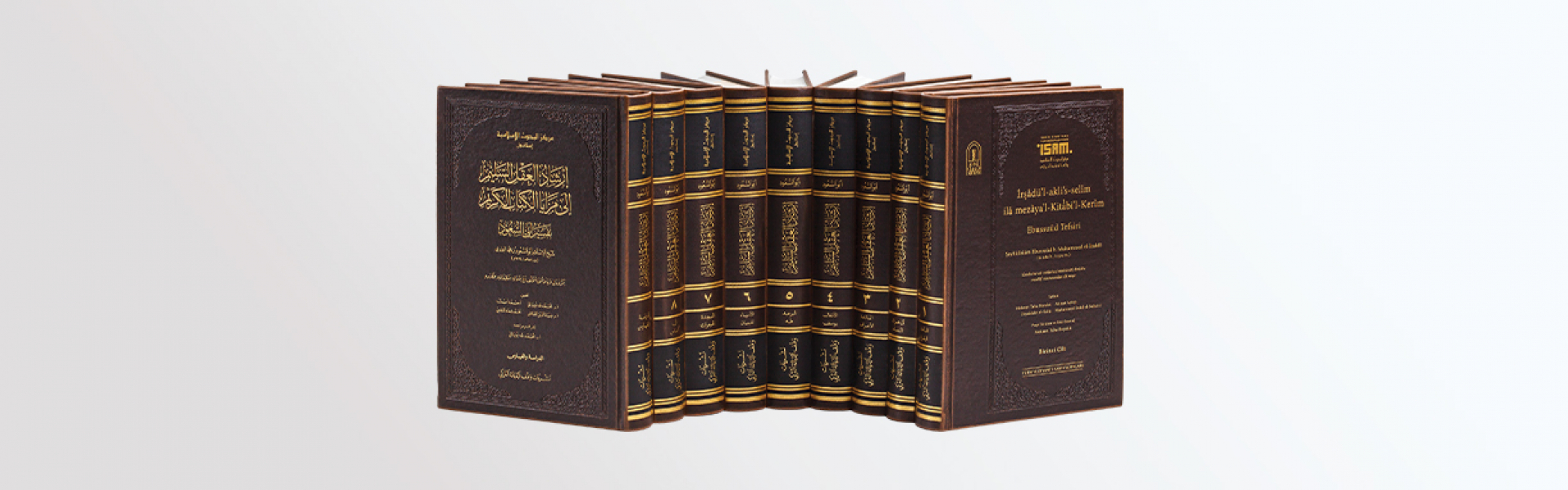
Although İSAM’s critical edition activities encompass all branches of knowledge that emerged and developed within Islamic societies, they focus predominantly on the transmitted and rational sciences, especially fiqh, uṣūl al-fiqh, kalām, and logic. At the same time, significant works in tafsīr, ḥadīth, history, biographical literature (ṭabaqāt), language, and literature have also been published by the İSAM Critical Editions Unit. In this context, many classical works composed within the Islamic intellectual tradition, either still extant only in manuscript form or previously published without adherence to scholarly standards, have been critically edited and published by the Unit.
Moreover, with the aim of establishing standardized practices for critical editions, the İSAM Unit for Critical Editions prepared for the first time in Turkish, a Guide for Critical Editions (Taḥqīq/Tenkitli Neşir Kılavuzu). With contributions from its expert researchers specializing in the theory of critical editions, the Unit has organized more than 30 Arabic Manuscript Critical Edition Courses, most of them at an international level. By providing advanced-level support to specialists in the field, it has contributed to the training of highly qualified researchers in Türkiye and has awarded certificates to more than 700 participants. These courses—conducted on an unprecedented scale in Türkiye by the İSAM Critical Editions Unit —have brought the importance of critical editions firmly onto the agenda of the academic community.