
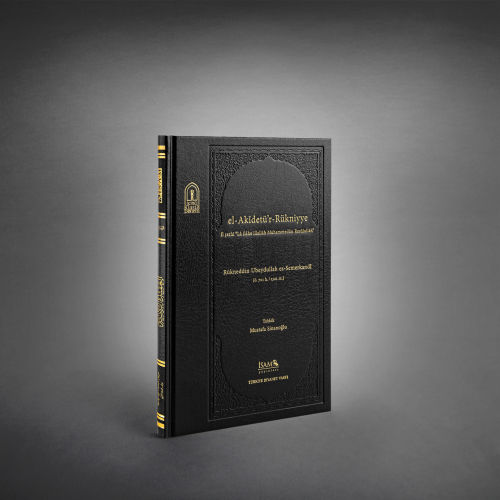
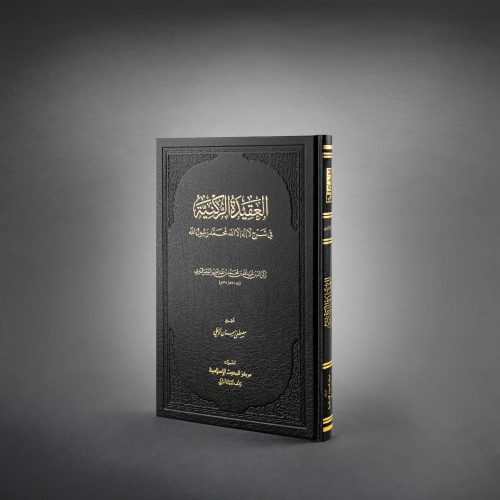
al-ʿAqīdatu al-Rukniyya fī Sharḥ Lā Ilāha Illa Allāh Muḥammad Rasūl Allah
Throughout Islamic history, countless works relating to both the transmitted (naqlī) and rational (‘aqlī) sciences of Islamic civilization were authored in the ancient cities of major intellectual regions such as Mā warā’ al-Nahr, Khurasan, Khwārazm, Turkistān, Sind–Hind, Bilād al-Shām, Egypt, al-Andalus, Bilād al-Rūm, and Rumelia. A rich scholarly literature subsequently emerged through the composition of commentaries (shurūḥ), glosses (ḥawāshī), marginal notes (taʿlīqāt), supplements (zuyūl), abridgements (talkhīṣāt), and revisions (taḥrīrāt) to these works. Unfortunately, a significant portion of this intellectual heritage has not survived to the present day for various reasons. Moreover, many of the works that are preserved in our libraries still exist only in manuscript form. Given that only a small number of these manuscripts are authorial autographs, it is essential that reliable critical editions be prepared and made available for scholarly use.
Within the Islamic intellectual tradition, particularly in the fields of creed (‘aqā’id) and kalam, it is a well-known fact that, in comparison with the literature grounded in Ash‘arī thought, works belonging to the Mā warā’ al-Nahr Ḥanafī–Māturīdī tradition are relatively few in number and that their publication has long been neglected. In order to help address this gap, we prepared a critical edition of al-‘Aqīda al-Rukniyya fī sharḥ lā ilāha illā Allāh Muḥammadun rasūl Allāh, authored by the Ḥanafī–Māturīdī theologian Abū Muḥammad Rukn al-Dīn ‘Ubayd Allāh b. Muḥammad b. ‘Abd al-‘Azīz al-Samarqandī (d. 701/1301). The first edition of this work was published in 2008 by the Türkiye Diyanet Foundation Centre for Islamic Studies (İSAM). Through this publication, we aimed to introduce a relatively lesser-known scholar and work of Māturīdī kalām, thereby adding another link to the chain of contributions made by the Mā warā’ al-Nahr Māturīdī tradition to Islamic thought.
This work, which constitutes one of the later-period sources of the Māturīdiyya school and addresses the full range of creedal and theological topics in outline form, is of particular significance in demonstrating that the Ḥanafī–Māturīdī kalām tradition of Mā warā’ al-Nahr, which began to take shape from the third/ninth and fourth/tenth centuries onward, remained intellectually vibrant well into the seventh/thirteenth century. The text also engages with certain issues not commonly found in standard creedal works and includes citations from Abū Ḥanīfa, Imām al-Māturīdī, Abū al-Layth al-Samarqandī, and Abū al-Mu‘īn al-Nasafī.
Presented in biographical sources as one of the leading Ḥanafī scholars of his time, Rukn al-Dīn al-Samarqandī produced works not only in jurisprudence and kalām but also in Qurʾanic exegesis (tafsīr), ḥadīth, and Sufism (taṣawwuf). A defining feature of his writings is their systematic and pedagogical style, which conveys foundational knowledge from various branches of the Islamic sciences in a manner well suited to madrasa students. Prepared in accordance with the İSAM Principles for Critical Editions (İTNES), this work is hereby made available once again for the benefit of researchers.
Click to buy.