
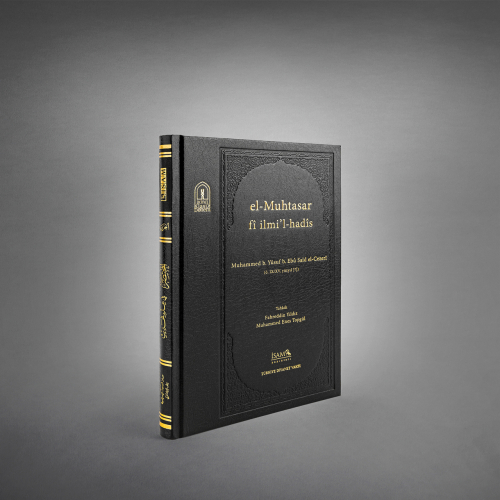
al-Mukhtaṣar fī ʿilm al-ḥadīth
The work entitled al-Mukhtaṣar fī ‘Ilm al-Ḥadīth, authored by Muḥammad b. Yūsuf al-Jazarī, an Ottoman scholar with deep expertise in the sciences of language and logic, diverges from the classical ḥadīth methodology literature shaped along the line of Ibn al-Ṣalāḥ in terms of both its structure and classifications, as well as certain methodological approaches it adopts. Beginning with a discussion of “the qualities required of a student of knowledge” and subsequently addressing methodological issues, the work allows the author’s preferences, particularly with regard to weak (ḍaʿīf) and fair (ḥasan) ḥadīths, to be observed with notable clarity. Moreover, while reinforcing the material he draws from the earlier literature from different perspectives, the author at times articulates explicitly critical assessments.
The critical edition of the work is based on the two extant manuscript copies that have survived to the present day. Published in accordance with the İSAM Principles for Critical Editions (İTNES), the volume includes, in addition to information on the author’s life, a detailed introductory study examining the content of al-Mukhtaṣar, its sources, methodology, manuscript tradition, and the editorial principles followed in the preparation of the edition.
Prepared within the scope of İSAM’s Late Classical Period Project and published by İSAM Publications on the basis of a critical edition by Fahreddin Yıldız and Muhammed Enes Topgül, this work aims to provide an overall picture of the Ottoman-period literature on ḥadīth methodology, a field that merits further academic studies and publications.